How To Read Your Book Like an Editor


"Easy reading is damn hard writing." — Nathaniel Hawthorne
Finishing your first draft is a huge accomplishment—but it's not the finish line. It's the beginning of revision.
In last week's episode, we celebrated typing The End. This week, we're opening that manuscript again and answering one of the biggest questions every writer eventually asks:
"Where do I even start?"
The answer may surprise you.
Most writers immediately begin fixing grammar, rewriting sentences, and polishing paragraphs. But that's like choosing paint colors before you've decided whether the walls belong where they are.
In this episode of The Edit, Holly walks you through a simple five-pass editing process that helps you step back, see your manuscript the way an editor does, and revise with confidence instead of overwhelm.
Whether you're writing a memoir, nonfiction book, business book, or novel, these strategies will help you focus on the right things in the right order—saving time, reducing frustration, and creating a stronger book.
In This Episode
- Why most writers start revising in the wrong place
- The "remodeling a house" analogy that changes the way you'll think about editing
- How professional editors learn to see the big picture before fixing the details
- Why trying to edit everything at once leads to overwhelm
- A practical five-pass revision process you can use with every manuscript
- How to protect your authentic voice throughout revision
- Why clarity is always more powerful than sounding impressive
- The difference between polishing words and strengthening your message
The Five Revision Passes
Pass One: Read Like a Reader
Resist the urge to edit. Simply experience your manuscript as your readers will. Notice what works, what drags, what surprises you, and where your attention begins to wander.
Pass Two: Look at the Big Picture
Examine the structure of your book. Does every chapter serve a purpose? Is your message clear? Are ideas in the right order? This is where you strengthen the foundation before worrying about the details.
Pass Three: Protect Your Voice
One of the most important questions you can ask is:
"Does this still sound like me?"
During revision, it's easy to become more formal, over-explain ideas, or accidentally edit away the personality that makes your writing unique. Your readers connected with your perspective—don't lose it while trying to sound more "writerly."
Pass Four: Read Through Your Reader's Eyes
Shift your focus from yourself to the person holding your book.
Ask:
- Where might they become confused?
- Where do they need another example?
- Where will they feel encouraged?
- Where are they most engaged?
- Does every chapter move them forward?
Every chapter should take your reader somewhere emotionally, mentally, practically—or all three.
Pass Five: Now It's Time to Edit
Only after you've strengthened the structure, protected your voice, and improved the reader's experience is it time to polish:
- Grammar
- Word choice
- Sentence flow
- Transitions
- Readability
- Final proofreading
Editing matters—but only after the book itself is solid.
A Thought to Remember
Revision isn't about making your writing sound smarter.
It's about making your writing clearer.
Sometimes the strongest revision isn't adding more words—it's removing the ones that don't serve the reader.
Simple writing isn't shallow.
Simple writing builds trust.
Key Takeaways
- Read before you revise.
- Fix the big picture before the small details.
- Protect your authentic voice.
- Think like your reader.
- Save grammar and polishing for last.
- Connection matters more than perfection.
Favorite Quote from This Episode
"Your first draft proved that you could write the book. Your revisions are where you shape that book into something your readers will remember."
Resources
If this episode encouraged you, share it with another writer who has just finished a first draft. Chances are, they're asking the same question:
"What do I do now?"
You don't have to revise perfectly.
You just have to know where to begin.
Connect with Holly Totten
Website: https://www.writelynotable.com
Email: writelynotable@gmail.com
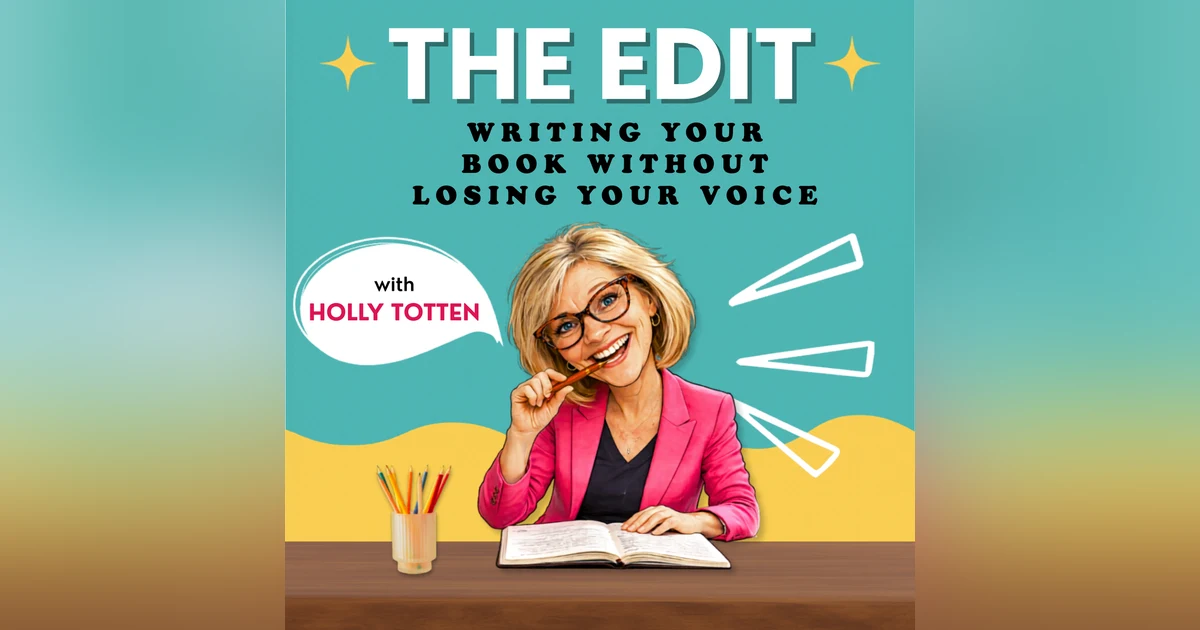
Podcast: The Edit – Writing Your Book Without Losing Your Voice
If you're enjoying The Edit, please consider following the show, leaving a review, and sharing it with another writer. It helps more storytellers discover the podcast and reminds them that they don't have to navigate the writing journey alone.
And remember…
Your Story without Your Voice is Only Words.
